
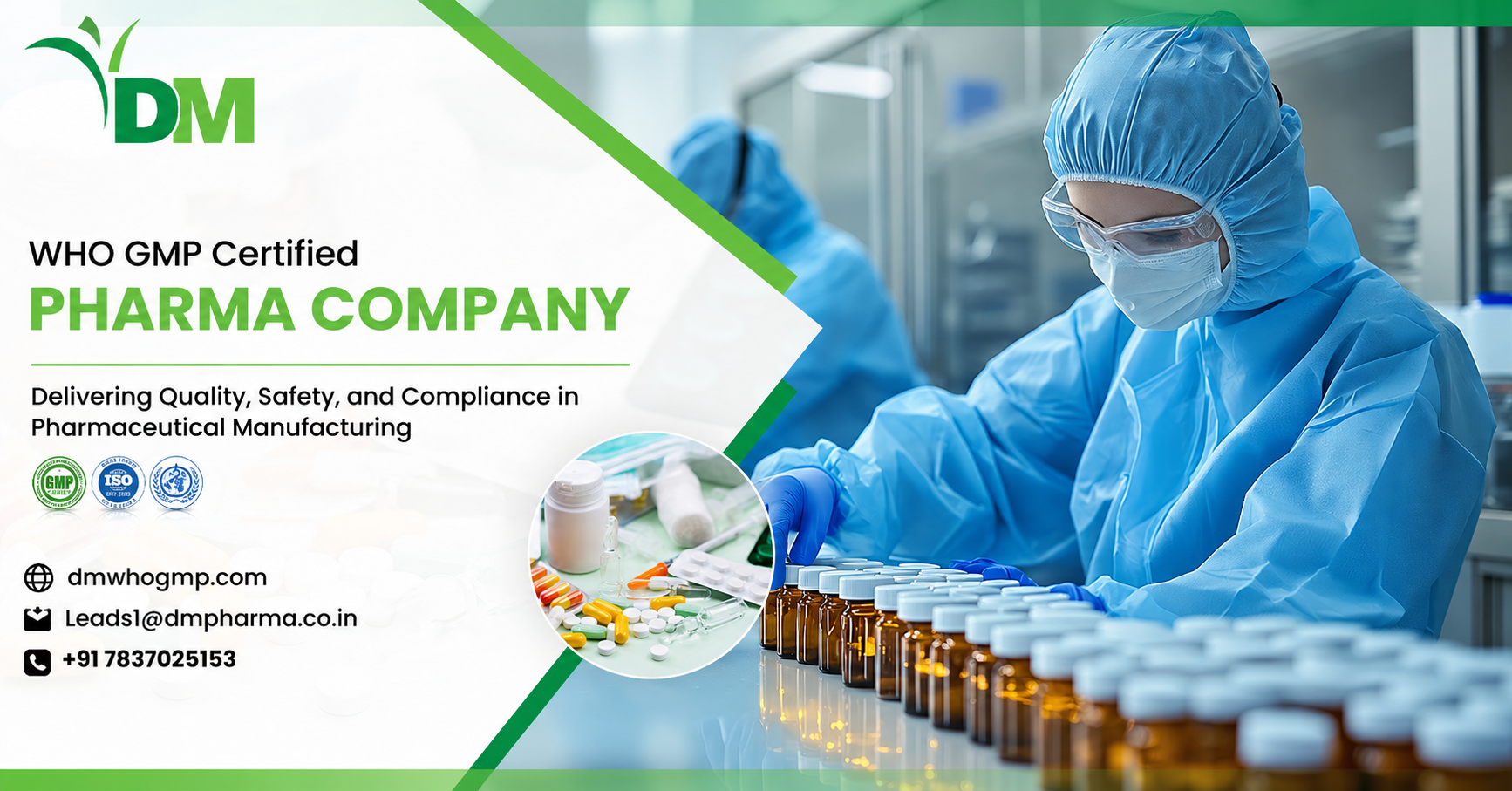
In the pharmaceutical industry, product quality, client safety, and regulatory compliance are non-negotiable. Whether you’re launching a new medicine, outsourcing production, or simply expanding your product portfolio, picking a WHO-GMP certified pharma company is often one of those big decisions you can’t really ignore. Additionally, A WHO-GMP-certified manufacturer follows internationally recognized Good Manufacturing Practices (GMP), which helps make sure the product is manufactured, tested, packaged and stored in a consistent way. All of it is done under strict quality standards. For pharma brands, startups, hospitals and distributors, this kind of certification lowers business risks and also makes it easier to build confidence with healthcare professionals and everyday consumers.
Why is a WHO-GMP Certified Pharma Company Important for Pharmaceutical Manufacturing?
A WHO-GMP (World Health Organization–Good Manufacturing Practices) certified pharma company operates manufacturing facilities that match globally accepted quality management systems. These expectations cover almost everything about making pharmaceuticals, like getting raw materials, the production steps, checking equipment, maintaining cleanliness, testing for quality, keeping detailed records, packaging, storing products and distributing them. So, the idea is pretty straight, every batch of medicine should be safe , effective, and consistently reliable in quality, not only “usually ok”.
Importance of a WHO-GMP Certification in Pharmaceutical Manufacturing Services
1. Ensures Consistent Product Quality
One of the most common worries in pharmaceutical manufacturing is how to keep quality stable across every single production batch. A WHO-GMP-certified manufacturer therefore uses uniform manufacturing procedures, proven processes, and strong quality controls. As a result, these actions lower the amount of variation, and help ensure dependable product results. And yes, there are business advantages too: less product feedback, better customer happiness, and stronger brand trust, overall.
2. Helps with Client Safety
Medicines affect real health outcomes, so safety becomes the main priority. WHO-GMP expectations reduce the risk of things like contamination, wrong formulations, cross contamination, labeling errors, and packaging defects . Because each stage is monitored and tracked, client well-being is protected early, not just “inspected after the fact”.
3. Satisfies Regulatory Requirements
A lot of government authorities and health organizations, especially , tend to prefer medicines produced in WHO-GMP certified facilities; sometimes it’s even sort of required, like officially, or through the wording of the tender.
Plus, partnering with a certified manufacturer can really make the whole path simpler, because it smooths out things like
- Regulatory approvals,
- Product registrations,
- Government tenders,
- Institutional supply contracts,
So, a business can get into monitored, regulated markets a bit faster with less friction overall.
4. Strengthens Trust With Healthcare Professionals
Doctors , hospitals, pharmacies, and distributors usually check manufacturing standards before they recommend , or buy pharmaceutical products. On top of that, a WHO-GMP certified company basically sends a clear message of real commitment to:
- Product quality
- Manufacturing excellence
- Regulatory compliance
- Ethical business practices
That kind of signal tends to build confidence across the entire supply chain, from the factory floor to the shelf.
5. Minimizes Manufacturing Risks
Weak or sloppy manufacturing practices can cause the following:
- Product recalls
- Regulatory penalties
- Financial losses
- Brand reputation harm
- Customer dissatisfaction
Thus, WHO-GMP systems also add preventive quality controls, so potential issues are spotted before products ever reach the market.
Typical Challenges Companies Face Without a WHO-GMP Manufacturing Facility
When a business collaborates with an uncertified manufacturer, the situation can deteriorate rapidly; for instance, product quality may become inconsistent.
- Inconsistent product quality
- Delayed production timelines
- Regulatory compliance troubles
- Narrow market acceptance
- Product rejection during inspections
- Weak or incomplete documentation
- Higher recall risks
- And then there’s the loss of customer confidence.
Hence, Picking a trusted WHO-GMP Manufacturing Facility particularly helps reduce most of those operational and business risks.
Who Should Go for a WHO-GMP Certified Pharma Company?
A manufacturing partner that follows WHO-GMP is a good fit for
- Pharma startups
- PCD pharma franchise businesses
- Pharmaceutical marketing companies
- Third-party manufacturing clients
- Hospitals and institutional buyers
- Nutraceutical brands
- Ayurvedic companies that need modern production practices
- Export focused pharmaceutical organizations
Questions to Ask Before Choosing a WHO-GMP Certified Pharma Manufacturer
Before you pick a manufacturing partner, it helps to ask a few things, even if you think you already know the answers, like:
- Is the facility actually WHO-GMP certified right now, not just “recently” certified?
- What kind of quality control systems do they use day to day?
- Do they keep batch manufacturing records in a proper way, with everything traceable?
- What testing gets done before the product release?
- What documentation exactly do you get with each batch, and is it fully complete?
- How do they deal with complaints and recalls if something happens?
- What are the production turnaround times, and are they realistic for your schedule?
- Do they support product development, plus packaging, or do you need to bring that in separately?
- What experience do they have in your therapeutic segment, and can they show relevant work?
Consequently, these questions help companies make clearer decisions and reduce manufacturing risk.
Time to End
Picking a WHO-GMP certified pharma company is kinda a big deal because it helps make sure the product quality stays high, client safety is protected, and regulatory compliance stays in line, plus it supports those longer term business results too. If you are outsourcing manufacturing, launching a new pharmaceutical brand, or trying to expand your product portfolio, working with a certified manufacturer like DM Pharma tends to cut down operational headaches while improving market credibility. In today’s competitive pharma space, WHO-GMP certification is more than just a compliance item. Consequently, it’s a sign of quality, steadiness, and trust for manufacturers, distributors, and also healthcare professionals.
Frequently Asked Questions (FAQs)
Q1. What is a WHO-GMP certified company?
A WHO-GMP certified pharma company usually means they follow internationally recognized Good Manufacturing Practices, but they also try to keep medicine quality, safety and consistency on a steady level.
Q2. Why do you require a WHO-GMP manufacturing site?
It really helps with those standardized production steps, solid quality checks, the right regulatory alignment, and products you can rely on over time not just once, in a sort of steady, calm way.
Q3. What is a Schedule M-compliant pharma unit?
A Schedule M compliant pharma unit is basically a manufacturing setup that follows the manufacturing and quality conditions written under India’s Drugs and Cosmetics Rules, for pharma production.
Q4. What is the difference between WHO-GMP and Schedule M compliance?
WHO-GMP is based on internationally accepted standards of manufacturing. A Schedule M Compliant Pharma Unit is more specific. It covers the GMP expectations to be met by the pharmaceutical manufacturers in India. Thus one set of standards is broader in scope and the other is more tied to local rules.
Q5. How to verify WHO GMP certification for pharma companies?
You can also check their regulatory approvals and confirm certificate validity with the relevant authorities not only by marketing papers or presentation decks, and verify the certification details.
Q6. Why partner with a WHO-GMP certified manufacturer for third-party manufacturing?
It is best to choose a WHO-GMP certified manufacturer for third party manufacturing. This ensures consistent quality of the product, documented manufacturing steps, regulatory compliance and generally reliable supply especially when schedules are tight or chaotic.
Q7. Does WHO-GMP certification guarantee high quality medicines?
It doesn’t mean “perfect, every time,” but it does suggest the medicines are produced within controlled quality systems, aiming for consistent performance, safety, and overall quality, with checks and guidance rather than guess work.